Showing posts with label New Jersey. Show all posts

Monday, June 23, 2014

Using oral histories to bring a city alive

By Pam Bailey, NeighborWorks America blogger

This is the second post in a three-part series on the power of oral storytelling. Read the first post.

HANDS, a NeighborWorks member in Orange, NJ, was an early believer in the power and versatility of the human voice, and has put the medium to a unique use – an oral history “tour” of the community that is helping the old and young alike re-discover why they should love their home town.

“Orange is only 2.2 square miles, but sort of embodies the historical arc of American cities,” says Molly Rose Kaufman, who discussed the project called [murmur] at the May NeighborWorks Training Institute on Purposeful and Powerful Storytelling. “De-industrialization left it with a declining population and employer base, and a lot of vacant properties. It’s a contagious process. A lot of young people just want to escape; they don’t know or connect with the rich history of the town, and the progress that’s happening that should make them proud.”

Murmur, however, has helped change that dynamic. The concept, first piloted in Toronto and now in cities ranging from Sao Paulo to Edinburgh, is simple: Record stories of residents explaining the history behind a particular spot – whether a park, a building or just an intersection – and set up “listening posts” around town. A green ear-shaped sign marks the location of each story, inviting passers-by to call a special phone number and listen to a narrative about what happened at that spot in the past.

Two [murmur] volunteers interview a resident about
a local story.
Orange now has 15 sites, all within four to five blocks, with 30 stories. The stories run the gamut from memories of boxing legend and Orange native Tony Galento, to recollections of Martin Luther King Jr.'s visit shortly before his death, to the accomplishments of local hero Monte Irvin, who was inducted into the Baseball Hall of Fame for his performance with the Orange Triangles, a professional baseball team in the Negro National League. (Click on the links to hear for yourself.)

While HANDS loved the idea of being part of an international movement, however, it gave the concept its own twist.

“We recruited high school students in our youth arts program to find and record the stories,” explains Kaufman, who launched the program while a community organizer with HANDS. “Some of them ended up telling their own, personal stories. It was the first time for many of them to discover and appreciate that they have roots in a pretty fascinating town.”

Khemani Gibson (left) in the process of installing the
ear-shaped [murmur] signs.
One of the eight youth who recorded those first stories was Khemani Gibson. And he is quick to agree that the [murmur] project changed his life – by awakening a love of history, and his town.Gibson was born in Jamaica, but moved with his family to Orange when he was just a few months old.

“But I really didn’t feel any connection to Orange until [murmur],” he says. “Actually, I wanted my family to move. I just saw it as a broken-down town. Now, though, after learning so much about the city’s history and the people, my perception has changed to ‘why would I want to leave this place?’”

Gibson is particularly interested in black history, and has gone on to major in pan-African studies and Spanish at New Jersey’s Drew University. He returns to Orange regularly, however, to help the next generation of youth follow in his footsteps. Since September, he has been working with sixth through eighth graders to help them gather a new round of stories that will be used not only to update the listening stations but to develop a booklet about their city’s history for the third-grade curriculum.

“I was a little apprehensive at first, thinking that maybe the kids would be too young to really engage on this topic,” laughs Gibson. “But they ask questions like you’d hear at a town hall meeting; I’m learning a lot from them.”

And what’s next for Gibson? He already is planning to pursue his Ph.D., focusing on the African diaspora, but ultimately, “I feel so connected to Orange now that I wouldn’t mind coming back when I’m done.”

Next post: Tips for recording your own “naked voice” interviews.

Wednesday, May 1, 2013

Reflections on Superstorm Sandy After Six Months


by Deborah Boatright, northeast regional director, NeighborWorks America


Six months after Superstorm Sandy rocked the coastlines of New Jersey, New York City and Long Island, NeighborWorks America and its affiliates remain deeply engaged in helping homeowners and businesses to recover and rebuild. We are committed for the long haul; with our sights set on strengthening community resiliency in an era of climate change. 

Over the past six months, NeighborWorks America educated more than 750 contractors and homeowners at 13 mold remediation trainings, six of which were co-sponsored with NeighborWorks affiliates. A fully updated “Navigating the Road to Housing Recovery Guide”, providing “road maps” to residents on rebuilding, repairing, selling, relocating, buying or renting, was released in March, and 90 counselors and nonprofit professionals were trained in its use. The Navigating Guide and Mold Remediation tools are downloadable from our website: www.nw.org/sandy.

NeighborWorks America’s northeast regional headquarters is located in lower Manhattan, and our local staff has been steeped in recovery and resiliency discussions throughout the region. Our office was closed for four months due to flooding. Staff came back to a changed landscape. Many of the small stores that surround our building have yet to reopen; and the South Street Seaport, a major tourist attraction and hub for small businesses, remains shuttered. Similar conditions exist in other hard hit commercial areas along the region’s vast shoreline. 


Wayne Meyer, president of NeighborWorks affiliate
New Jersey Community Capital, was one of a dozen
people honored this week at the White House as
a Superstorm Sandy “Champion of Change for
the organization’s REBUILD New Jersey Fund.

This is a pivotal time in recovery and rebuilding, as congressionally appropriated resources are becoming available for deployment, and the private funding community is more organized and focused. NeighborWorks America has a unique role to play, utilizing our nationally regarded expertise in training, community building, impact measurement, capacity building and grant making. Our affiliates are doing great work, guided by a deep commitment and astute professionalism that is the hallmark of NeighborWorks. It is challenging work in the communities that we have all long called home.   

Wayne Meyer, president of New Jersey Community Capital (NJCC), was one of a dozen people honored this week at the White House as a Superstorm Sandy Champion of Change for the organization’s REBUILD New Jersey Fund. The REBUILD New Jersey Fund closed 23 loans totaling $800,000, preserving 135 jobs for customers like Architectural Hardware in Jersey City, New York, a family owned and operated distributor of metal and wood doors, frames and hardware for more than 40 years. Architectural Hardware had up to 56 inches of water, and lost a great amount of inventory and all its vehicles. Their loan allowed the owners and their nine employees to get back to business through the purchase a new forklift, replaced inventory, and replenished revenues.

In Monmouth County, New Jersey, homeowners and residents seeking help with their housing situation continue to come to the Affordable Housing Alliance’s offices daily, and the organization has seen a rise in the number of applicants for assistance through their statewide utility relief program.  Fifteen of the 17 mobile homes purchased by this NeighborWorks affiliate are now installed and on the way to full occupancy, and the  remaining two, accessible units for people with disabilities, are arriving soon. The Alliance’s work is featured in a compelling video by the Robin Hood Foundation, focusing on the story of Kanseisha Wilson, a home health aide and mother of two. 

Neighborhood Housing Services of East Flatbush, part of NeighborWorks affiliate NHS of New York City, opened a Housing Recovery Center in Brooklyn’s Canarsie section. Homeowners there were able to re-occupy their homes only after the City of New York’s rapid repair program addressed their most emergent needs.  Permanent repairs remain to be done, and funds are in short supply. NHS’ experienced contract management specialist has helped 57 families to assess their homes and plan for appropriate repair, and the organization secured funds for small grants of $10,000 to help offset the costs. Qualifying counselors assist families to negotiate insurance claims, address mortgage issues and avoid scams, which are rapidly growing. The innovative program was recently featured on NY1.

"It is important for Asian Americans for Equality to be there because
people in the community trust us. Our physical presence shows we are
there for the long haul,” said Raquel Colon, senior housing counselor.
Asian Americans for Equality (AAFE) is working heavily in Queens, Southern Brooklyn and Staten Island with a focus on Asian Americans and new immigrants. AAFE has stationed staff at local grassroots organizations in Coney Island and Sheepshead Bay to strengthen their capacity, while offering grants, low interest loans, targeted technical assistance and one-to-one financial counseling to impacted homeowners and small businesses throughout the city. To date, over 160 businesses from all over the city have received loans totally $3.2 million from AAFE’s small business affiliate, and more than 200 walk-in clients were served just at one Emergency Help Center in Flushing, Queens. AAFE too is deeply concerned with scams and predatory contractors, and plans to review contractor records and work claims for homeowners. 

“There are three big issues that we are facing in terms of recovery. Clients are being advised to elevate their homes, flood insurance rates are sky high now, and people need guidance and direction on how to navigate the bureaucracy. It is important for AAFE CDF to be there because people in the community trust us. Our physical presence shows we are there for the long haul,” said Raquel Colon, senior housing counselor. 

Wade attended a Hope for Homeowners event
sponsored by NeighborWorks America,
Hope Now Alliance, Community
Development Corporation of Long Island
On Long Island, which has the largest number of FEMA applicants of all three areas, Community Development Corporation of Long Island’s Sandy Housing Recovery Program is working extensively in seven towns throughout Nassau and Suffolk counties. CDCLI is currently focused helping 143 clients to create individual plans to address their immediate and long term housing needs, and is making their full array of housing services available. Insurance and mortgage issues related to the storm are prevalent—49 of their current clients are also receiving help with these issues.  Amityville resident Harold Wade, who came to CDCLI at a Hope for Homeowners event, typifies many homeowners: “"I was under water in two ways, both from Sandy and financially," said Wade. "It’s a long road ahead but it’s my opportunity to start over again."

Tuesday, December 4, 2012

Recovering from Hurricane Sandy

This blog comes to us from Donna Blaze, CEO of our affiliate Affordable Housing Alliance in Eatontown New Jersey. We thank her for making time out of her extremely busy schedule to share updates on what’s happening in her community post Hurricane Sandy. 

By Donna Blaze
Affordable Housing Alliance, CEO

Monmouth County, New Jersey, is a seaside region and when Hurricane Sandy struck on October 29, it hit hard.  More than15,000 residents in this community have been personally affected by the disaster. Some of their homes have been blown out to sea, while others were in 8 to 12 feet of water and now uninhabitable.  Making things worse, many local restaurants and businesses catering to tourists have had the same catastrophic losses, leaving some both without a home and job.
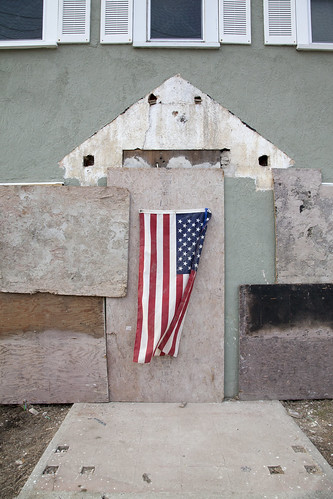
A boarded-up home in Monmouth County

My nonprofit, Affordable Housing Alliance, had a full plate prior to the storm. We were in the midst of expanding to two offices, constructing five affordable housing developments, and administering a county-wide utility program.  Now, however, we feel obligated to take on more. After all, these storm victims are our friends, our neighbors and our clients.

One of the biggest challenges right now is a lack of temporary housing within the county. Available homes are located in places like Atlantic City – more than an hour away in some cases. For people who have lost cars or who rely on public transportation, this means added stress and time in their daily commutes.
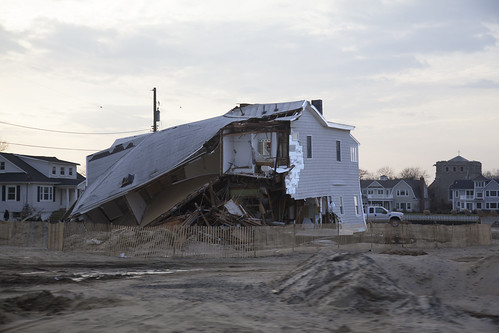
A beachfront home, devastated by the storm
 Unfortunately, this is just one component of what people are struggling with. Many have lost important mortgage and identification documents, complicating their ability to get help. Even those who are lucky enough to have papers and insurance must deal with the absence of family mementos – a baby footprint, a letter from grandma -- many of those little things that make up who you are.

Last week I took NeighborWorks America’s CEO Eileen Fitzgerald and COO Chuck Wehrwein to see what’s happening here. I introduced them to the residents at Union Beach Disaster Recovery Center, which is a combination of local volunteer efforts and FEMA  disaster center.
Chuck Wehrwein and Eileen Fitzgerald
talking to Union Beach center volunteer

I also took Chuck and Eileen to sites where we hope temporary housing can be made available. Fort Monmouth, an abandoned military site, has 600 potential temporary housing units. We had been considering moving our office to this location prior to the storm, and its size and current vacancy make it an appealing prospect. Another location is a manufactured home park with an estimated 16 spaces available. This could be converted quickly to either temporary or permanent (rent-to-own) housing.

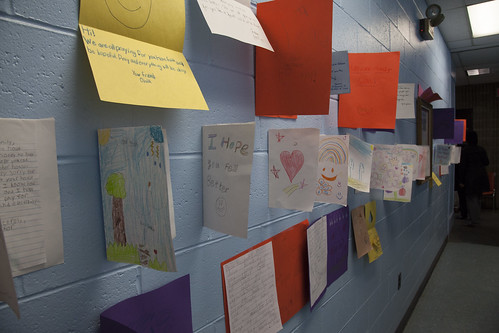
Cards sent from schoolchildren in Virginia decorate
the walls of the Union Beach Disaster Recovery Center
Our current focus is to help people understand what options are available to them and to help them make the right decisions. Sometimes we don’t know the answer, but we are working to find out. We appreciate the tremendous outpouring of support and the $100,000 grant from NeighborWorks America. We also appreciate the chance to learn from cities that have suffered similar disasters. For example, Bill Stallworth, executive director of NeighborWorks affiliate Hope CDA, offered good recovery advice based on his experiences in post-Katrina Biloxi, Mississippi. 

It is by sharing our knowledge and our resources that we can return our residents to homes and to the communities they remember before the storm in a more timely way.  

Note: NeighborWorks America recently made grants to organizations affected by Hurricane Sandy, including,  Affordable Housing Alliance ($100,000), Asian Americans for Equality ($50,000), Neighborhood Housing Services of New York City ($50,000), Community Development Corporation of Long Island ($20,000), NeighborWorks New Horizons ($20,000) and Brand New Day ($10,000). Typically NeighborWorks America grants to organizations serving this area have generated more than $50 in direct local investment for every grant dollar awarded, which would amount to more than $12.5 million in this case.