This article was jointly produced by the NeighborWorks America National Foreclosure Mitigation Counseling team and the Home Equity Conversion Mortgage (HECM) program team.
We hear a lot about reverse mortgages in the media, but there is a good deal of confusion about what they are and how they work. To begin with, many people refer to “reverse mortgages” in general, when they really mean to speak about those loans offered specifically by the Federal Housing Authority (FHA). This post focuses on these FHA reverse mortgages, also called home equity conversion mortgages, or “HECM” loans.
The idea behind a HECM loan is that many older borrowers are house-rich, but cash poor. Imagine, for example, an elderly retired couple that has long since paid off their home, but lacks the money needed for daily expenses like medicine, gas and food. A HECM loan would allow the couple to use their home’s equity as a form of income. They would borrow against the market value of their home and get cash in return. To pay off the loan, they or their heirs might sell their home some years in the future or repay with other means.
Advantages of a reverse mortgage include the fact that the homeowner can stay in their home and does not repay the loan until he moves or sells the property, or passes away. At that time, the borrower owes the lesser of the loan balance or the value of the property. A HECM loan thus differs from a home equity loan in that the borrower doesn’t need to make any payments during the life of the loan. Furthermore, there are no traditional income or credit requirements. To qualify for a HECM loan, a homeowner must be at least 62 years old and own their home free and clear or be able to pay off all existing mortgage debt with HECM loan funds. The homeowner must also talk with a HUD-approved HECM counselor.

An illustration of a successful HECM loan situation might be a family where an aging father wishes to remain in his family home, but lacks savings to be able to pay for all his regular bills. Instead of having to sell his house, the father can stay where he is and continue to be around the people and places that have meant so much to him throughout his life. His children may not be able to keep the family home if the loan is not repaid, but during the father’s life, he may be able to maintain a greater degree of financial independence.
However, HECM mortgages are certainly not for everyone. One big challenge is that they encumber the borrower’s property with debt, which is not in alignment with all cultural values and may complicate or preclude the borrower’s ability to pass the home on to his or her heirs. If the borrower’s heirs are unaware of how the HECM loan works, they may be unpleasantly surprised to find a large debt owed on the property. It’s also possible that an elderly borrower might be alive, but have health issues that prevent him or her from continuing to live in the home. Should the borrower move out, say to a nursing home or to live with family, someone would need to assume responsibility for closing out the HECM loan. Repayment options include selling the home, repaying the loan or refinancing the loan.
In recent years, some foreclosure counselors have recommended HECM loans as a way for older clients to pay off their debt and remain in place. In these cases, a borrower would take out a lump sum HECM loan, and use it to pay off the balance of their conventional mortgage debt. This would buy the borrower time, but it might not leave the borrower with any extra cash, meaning that they would still need to find a way to pay for their day-to-day living. Another source of income would be needed — which could be a problem if, for example, the foreclosure was the result of multiple family members losing their jobs.

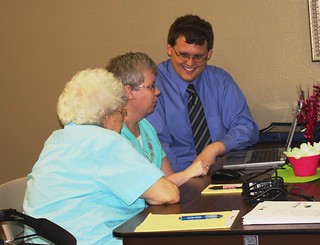
In all cases, homeowners considering a reverse mortgage should carefully explore whether it is the most appropriate means of achieving their financial ends. Housing counselors help homeowners clarify their objective and whether a reverse mortgage best fits that goal. Counselors also ensure homeowners take all fees and charges into account, walk homeowners through the rules to confirm the borrowers understand completely the unique mechanics and risks of this loan type, and help homeowners avoid scams. However, counselors are no substitute for evaluating personal values or talking to family members. Borrowers should think carefully about what choice is best for them, their family and their legacy.
For a list of HUD-approved HECM counselors, visit
https://entp.hud.gov/idapp/html/hecm_agency_look.cfm
HECM counselors can also visit
www.hecmcounselors.org for more information on HECM Counselor training and technical assistance available from NeighborWorks America.