Thursday, August 22, 2013

Vermont quarry closing brings economy down; NeighborWorks affiliate rallies residents

It’s a story that’s been repeated across America: What builds a town up is also what, eventually, brings it down. In Detroit, it was the auto industry. In West Rutland, Vermont, it was marble quarrying.

When high-quality marble deposits were discovered in the 1830s – followed by the extension of the railroad into town – Rutland was suddenly put on the map. The simultaneous decline of the famous quarries of Carrara in Tuscany, Italy, transformed it into one of the leading marble producers in the world. (The name of the main “drag”? “Marble Street,” of course.)

The double-whammy of a large strike in the 1930s and the Great Depression, however, took a toll from which the town never quite recovered. In 1986 the quarry was forced to close, plunging the outwardly idyllic enclave of “cows and jeans” into economic decline.

West Rutland today
“At its height, the quarry alone employed 2,400 people,” recalls Ludy Biddle, executive director of NeighborWorks of Western Vermont. “Now, there are only about 2,500 people living in the entire town and the county is the second-poorest in the state. For all social measures, it’s in the red – poverty, unemployment, teen pregnancies and, recently, foreclosures.”

Another recurring theme in America, however, is the recovery from adversity that’s possible when residents come together in response to crisis. The disastrous year of 1986 also is when the organization was founded by a group of local citizens to help the remaining residents stay in their homes by keeping them in good repair.  By the 1990s, the area serviced by NeighborWorks of Western Vermont had expanded from four neighborhoods to the entire county and a homeownership program was added to help both first-time buyers and a trickle of newcomers – primarily artists and families looking for a semi-rural lifestyle.

This year, the organization is celebrating its 10th anniversary as a chartered member of the NeighborWorks Rural Initiative, which strengthens communities with small populations by helping them integrate into their regional economies. It now serves three counties, not only with its original rehab assistance and homeownership counseling, but also with “financial fitness” coaching and foreclosure prevention. In 2012:

• Two foreclosed houses were purchased by the organization; rehab was begun on another five, with two completed and put on the market.
• 24 individuals graduated from the homebuyer education program and another 25 completed the organization’s financial-fitness training.
• Thirty-seven families successfully negotiated foreclosure alternatives with their mortgage lenders. Another 12 received coaching as they made the decision to opt for a reverse mortgage.
• Nearly $800,000 in loans was dispensed to pay for 40 home repairs.

Joan Jackson
Biddle is particularly proud of her organization's participation in the NeighborWorks Green Organization. In fact, in 2010, it was awarded a $4.5 million grant from the Department of Energy for its H.E.A.T. squad (Home Efficiency Assistance Team) – which now boasts the highest penetration rate in the country among similar programs.

Joan Jackson, a retired librarian who has lived in her Wallingford home since 1959, is just one example of the 577 households that received an “energy check-up” in 2012, thanks to the program. Her roof had been damaged by winter ice, the house was so cold she was constantly bundling up to stay warm and the increasing cost of fuel was a persistent worry due to her fixed income. But with the installation of insulation in her basement and upstairs walls, along with air sealing around her doors, ceiling and attic hatch, she is warmer and her fuel bills are 34 percent lower. (Watch a video interview with Biddle, as she explains just how the program works.)

“Twenty-five percent of the people we’ve been able to help with our H.E.A.T. squad are below 80 percent of the area’s median income – individuals who usually aren’t able to participate in programs like this, even though they need it the most,” says Biddle, adding that the organization is now looking for additional funds as the DOE grant sunsets. “The average household we serve spends 3-8 percent of their already-low income on energy. With H.E.A.T, they save an average of 386 gallons of fuel a year – about $1,500 a year. It’s central to our mission to make homeownership affordable.”


Wednesday, August 7, 2013

Rise in loan scams heighten need for outreach

Five years after the housing bubble burst, the caveat “buyer beware” unfortunately remains a fact of life for individuals hoping to re-finance their home or escape a foreclosure.

Although scams reported to the Federal Trade Commission and state attorneys general dipped in 2012 to 8,658, 2013 is seeing a significant uptick. If the current trend continues, the number of home loan scams reported in 2013 will exceed 11,000 – and that’s likely only the tip of the iceberg, since many such frauds are never officially recorded.  Along with the increase in reports is a worrying rise in average loss. According to the Loan Scam Prevention Database maintained by the Lawyers’ Committee for Civil Rights Under Law, the average loss from loan scammers in 2012 was $3,604; so far this year, it’s $4,098.

Barbara Floyd-Jones
Barbara Floyd-Jones, program manager of local support for foreclosure solutions at NeighborWorks America, warned of the dangers of these “wolves in sheep’s clothing” on a recent episode of the nationally syndicated radio program, The Yolanda Adams Morning Show.

Even if the person offering you a so-called great deal is “is a lawyer or sitting with you on a pew in a church,” Floyd-Jones warned, know the signs and “stay away from those kind of people. Not everyone is out to help you. They’re trying to make money off you.” Listen to her interview here.

In fact, the involvement of lawyers is an increasing trend. In 2012, 36 percent of reported scams involved lawyers; in 2013, their share is 45 percent. These shady practitioners are often heard in radio ads, which is why interviews like the one Floyd-Jones participated in are so important.

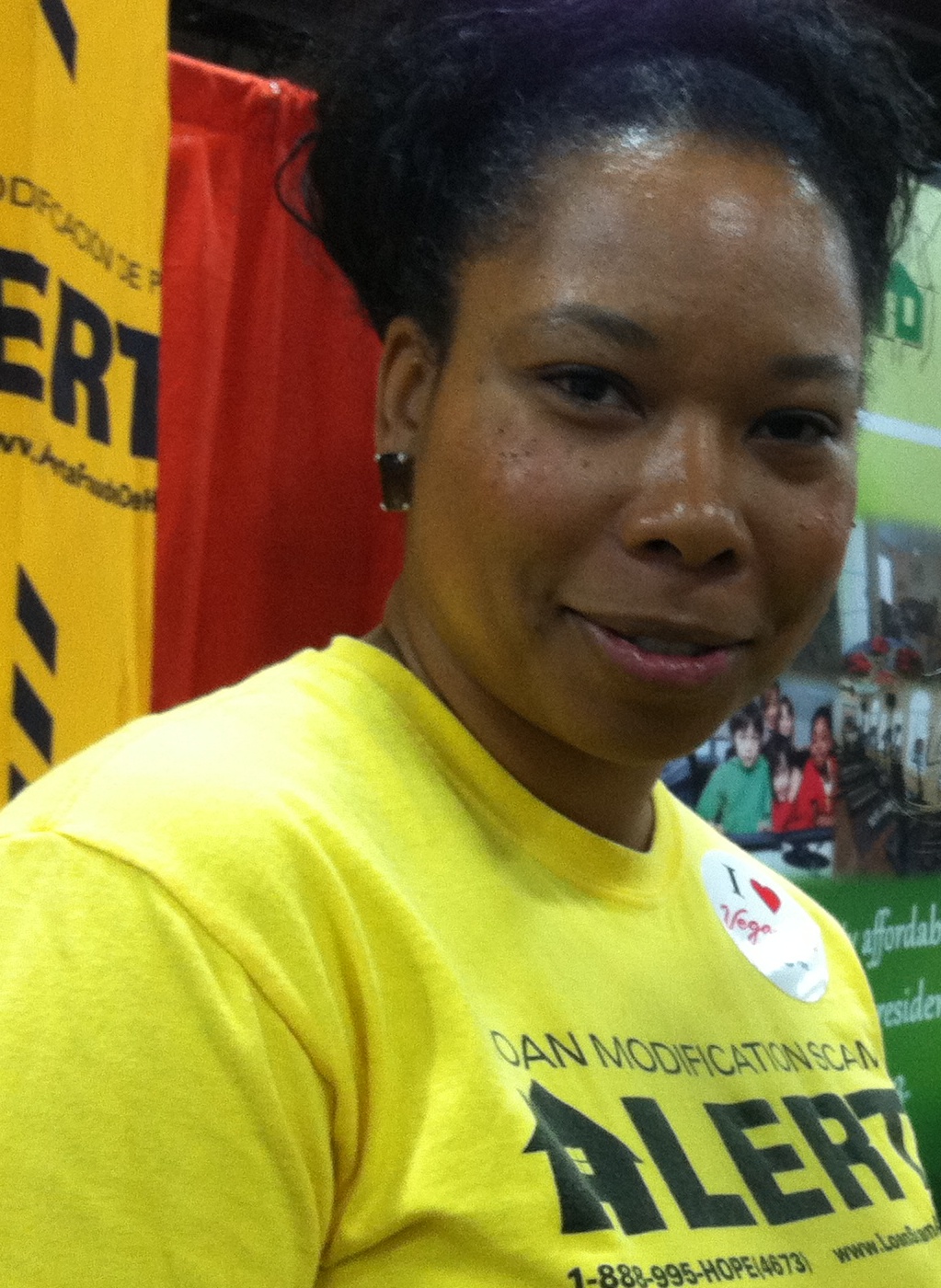
Recognizing the growing problem with loan scams, the U.S. Congress asked NeighborWorks America three years ago to launch a national public education campaign to empower homeowners to protect themselves through education and trusted referrals. Thus, the Loan Modification Scam Alert website and campaign were created. In addition to online education, it offers a call-in hotline, in operation 24 hours a day seven days a week, in 45 languages.

“By far, the most common scam is asking homeowners to pay a fee upfront or before a loan modification has successfully occurred,” says Floyd-Jones, adding that the most vulnerable targets are senior citizens and minorities for whom English is their second language. “The Federal Trade Commission ruled this practice is illegal in 2010, but most consumers don’t know it.”

Monday, August 5, 2013

Unconventional allies: Finding common cause with workers on the ‘front lines’ of communities


Photo of Eileen Fitzgerald
By Eileen Fitzgerald
Chief Executive Officer
NeighborWorks America
A woman with diabetes, evicted from her home after failing to keep up with her mortgage, is forced to find shelter with a string of friends. Unable to keep track of her medications or maintain a stable, healthy diet, her disease spirals out of control.

A youth’s grades plummet and he drops out of high school, unable to concentrate on his homework because he shares the same cramped living quarters with five siblings, his parents and grandparents.

An employee of a small business is chronically late and misses key deadlines because she cannot afford to live close to work or secure reliable transportation.


It’s true: Home matters. The lack of safe, clean, affordable housing concerns a wide network of frontline workers in the community. Talk to health care professionals, teachers and business managers, and the critical necessity of decent, accessible housing for health and productivity immediately becomes apparent.

Forty years of research show that reducing overcrowding, for example, lessens exposure to infectious diseases and promotes better health overall. One recent study by the University of Michigan illustrates that housing instability triggers depression and anxiety.

Likewise, teachers testify that children who live in safe, healthy, permanent homes do better in school. National Housing Conference research documents that children who move frequently are absent more from school, have trouble concentrating on their studies, and have difficulty making and keeping friends. In addition, children who live in overcrowded homes have lower math and reading scores, and are less likely to graduate from high school.

In the work world, managers at enterprises both big and small have learned firsthand that employees who are not stressed every month about how they will make their rent or mortgage payments—and ideally do not have arduous or expensive commutes—are more reliable and productive.

By remembering that safe, affordable housing affects virtually every aspect of a person’s life, the number and type of potential partnerships ripe for exploration expands exponentially.

This is re-posted from the Bipartisan Beat blog on the Bipartisan Policy Commission website.

Tuesday, July 16, 2013

The Challenges of a Hot Market - An Interview with Neighborhood Housing Services of the Inland Empire

This blog is reposted from StableCommunities.org.

Often we hear about long term vacancies as the consequence of the foreclosure crisis, but in some areas, the speedy return of the market has resulted in other problems for those in need of affordable housing. The Stable Communities Initiative recently sat down with Dawn Lee and Beena Khakhria of Neighborhood Housing Services of the Inland Empire to hear how the return of the housing market is impacting San Bernardino and Riverside Counties in California.

Stable Communities: How has the real estate market in the Inland Empire changed over the past few years?

Dawn Lee, Executive Director and Chief Executive Officer: We were a market hard hit, harder than most, with the foreclosure crisis.

Before the crash, people came to the Inland Empire for affordability. During the boom years, they were building in the area like crazy. With the building boom we also saw rising prices, sometimes tripling over short periods. And people were buying because they felt like “I’ve got to buy a house now because prices are going to keep rising.” Then the housing crash came as well as a failing economy and a high level of unemployment.

Beena Khakhria, Director of Real Estate: In 2007, we saw a huge decline in home values which led to a lot of foreclosures and people walking away from their homes. It crippled our counties. A lot of neighborhoods were like ghost towns. There were squatter issues, people destroying homes, it was really bad. As we saw the market go down, we saw investors come out of the woodwork. The crash had made investment in real estate even more palatable for investors. It wetted their appetite and they devoured.

Around 2010 and 2011, we started to see a lot of REOs come onto the market, but without adequate systems to in place to handle REO sales. While systems to handle REOs were being mastered short sales came on and many realtors jumped on the short sale bandwagon.

SC: Was there a moment when the market hit equilibrium before tipping to the sellers’ advantage?

Beena: There was a short period of time when buyers were able to get into the market and purchase homes, from December 2011 to April or June of 2012. That was a buyers’ market, but it lasted less than six months. After that, our buyers quickly lost out. If you were coming in with 3 percent down and asking for a contingency period and inspections then you were going to lose in the bidding process.

SC: What is the current climate of your housing market?

Beena: Now it’s a seller’s market. Inventory is low. In some places where we want to penetrate there just aren’t any homes.

Dawn: It is very much a seller’s market right now. For some buyers who come to us, this is the 20th or 30th house they have bid on. But the sellers are going after cash offers where the money will be a sure thing for them. That leaves our buyers stuck.

For us, we offer homes to first time buyers and “move-up buyers” with incomes in the low to moderate range. While others working in this space may have properties sitting, we don’t. We’ll list a house and we will get offers in a matter of hours or days. Recently, a home that we were selling appraised at $275,000, the buyer had some delays in their financing and by the time the deal was complete their house had increased in value to $289,000.

At the same time, rents are going up and often rents are more expensive than buying.

SC: Can you share the story of a family you have been working with?

Beena: One family, Maria and George*, started their search with NHSIE Realty in July of 2012. As a young family, they faced the challenges of finding housing that accommodated the needs of their four children; ages in 12, 10, 7 years and 6 months. Maria was pre-approved at a purchase price of $165,000, solely on her income. Her father had gifted them closing costs and partial down payment. George had been unemployed due to a work injury and was going through physical therapy to re-enter the workforce. They had also completed an 8-hour pre purchase class and were going to utilize our down payment assistance.

By the end of October they had submitted at least 25 offers. The rapid decline in available inventory and increasing home prices began to push them out of neighborhoods they had chosen. The agents and sellers were not prepared to work with first time homebuyers utilizing FHA or any city/county down payment assistance programs. Their offers were bid out by investors each time.

SC: What is NHSIE doing to respond to the shifting market and help families like these?

Dawn: As an organization, we have taken advantage of the REOs where we could and have made those homes available to prospective buyers.

A strategy that works for us, and we wish we could expand, is the purchase of homes through First Look programs. If there is a pool of houses that are available for a period of time exclusively to nonprofits, we have a better chance of securing them for first time home buyers who will be owner-occupants.

Another program we have is Opening the Door to Home Ownership, a fee based service for people who are struggling the most. To qualify, you have to have been looking and submitting offers unsuccessfully for three or more months. We match houses from the First Look programs with a buyer’s needs and get the buyer out of the highly competitive market. We renovate the home with the intention of selling the house to the prospective, pre-selected buyer. The program comes with lots of one-on-one coaching and education to ensure the buyers are making good choices and will be sustainable homeowners.

For all our programs, we screen our families and cross qualify to ensure the property is a good fit. We provide one on one coaching, pre-purchase education and home maintenance class.

Beena: We strongly believe that buying a home is a stressful period, and when the buyer feels they are competing with others, it can become a bad situation in their personal lives. We are able to be patient with buyers and allow them to complete the purchase process. We currently have two clients who have struggled with securing financing for up to 5 months. Going through normal channels, they would have had to cancel their contract well within the negotiated contract periods.

SC: How have the key housing challenges in these counties changed over time?

Beena: We are seeing challenges in securing portfolio. We are finding that when we are buying from the First Look programs, the margins we want aren’t there. It hasn’t been easy to find the right deals that make the strategy feasible for us to purchase these homes.

SC: How have you and your staff adapted in the face of market changes? What have you learned from these rapid shifts?

Dawn: We have learned to be flexible. Before, if you were in the foreclosure department, that’s all you did. If you were in the homeownership department, that’s all you did. We have made changes that allow us to be more responsive, now all of our staff are cross trained and cross certified. We are all housing advisors, not foreclosure or homeownership counselors.

We have also trained or hired more broadly skilled staff. We will always maintain foreclosure prevention services, but we see in response to the market that we need people who can offer a variety of services to the same client.

SC: What advice would you give to other organizations trying to monitor their housing markets and adapt to shifting challenges?

Beena: Watch your market. Be very attentive to the trends and understand the challenges your buyers are facing.

Dawn: Be flexible. Evaluate what is out there and always look for new opportunities. Even if you have developed a policy or plan that is focused, don’t be afraid to adjust. Use the data you find. Listen to your market. None of this will last forever but think about how you can be impactful right now. Treat every client as if they are a member of your family.

One of the biggest challenges is visibility. As a nonprofit we are strapped to market our organization. People don’t know we are here. Most people don’t see themselves as people who need the assistance. We want them to know that we are here and we can add value to the process.

Beena: Do a lot of marketing, customers need to know who you are and the value added services you provide.

SC: Any final words of wisdom?

Dawn: This is a unique moment in time. It will be a shame if we can’t do more at this moment, and we know we’ll get back to a point when the market is flooded.

* These names have been changed to respect the family's privacy.

Wednesday, June 26, 2013

The Data on Affordable Rental Housing is Mixed at Best


Photo of Eileen Fitzgerald
By Eileen Fitzgerald
Chief Executive Officer
NeighborWorks America
NeighborWorks America underscored its commitment to affordable rental housing this week at the launch of the 2013 State of the Nation’s Housing report by the Joint Center for Housing Studies (JCHS) at Harvard University.

I had the privilege of joining Eric Belsky, the director of the JCHS, and a panel of experts to talk about housing. While homeownership continues to draw the most attention, what is going on in the rental housing market demands attention.

The information on affordable rental housing in America is mixed at best, and for millions of households the data are troubling. According to the report, the number of renter households severely burdened by their monthly rent payment increased by 2.6 million between 2007 and 2011. Between 2001 and 2011, the number grew by 6.7 million. According to the State of the Nation's Housing report, which cites consumer price index data, rent increases have been far outpacing overall inflation.

As a national community development corporation that helps a network of nonprofit affordable rental property owners, we think these numbers are further proof of how important it is to continue supporting the development of affordable rental housing.

The NeighborWorks network owns or manages more than 102,000 rental homes. These locally owned and managed nonprofit corporations are committed to building more affordable rental homes, and to buying more properties that may become market rate after affordability provisions related to their development expire. More than ten percent of affordable rental homes are taken out of the affordable ranks each year.

NeighborWorks America will continue to be there for the NeighborWorks network by providing an average of $15 million in flexible capital to these owners of affordable rental housing. But our funding for affordable rental homes needs to be leveraged with long-term private sector funding. Affordable rental housing can’t be created and sustained by just one source of capital.

I urge everyone who cares about affordable rental housing to download the latest State of the Nation’s Housing report and to watch the recorded webcast (see above) of our discussion of the report on Wednesday, June 26.