Friday, October 26, 2012

What Makes You Part of a Community?

This blog entry is reposted from the Stable Communities blog

Avenue CDC photo courtesy of
Epic Shots Photography
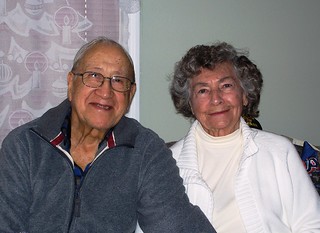
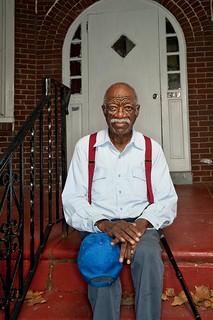
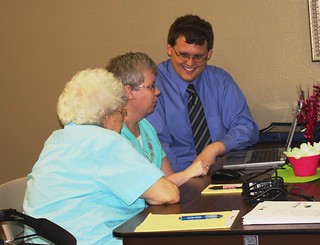
A three-year study by Gallup and the John S. and James L. Knight Foundation in 26 communities has been exploring the factors that attach residents to their communities and how community attachment plays a role in an area's economic growth and well-being. In general, the study results have shown that cities with the highest levels of attachment had the highest rate of GDP growth.

The Knight Soul of the Community (SOTC) study has studied residents' attachment to their communities — and how it's related to economic development — over 3 years, using interviews in English and Spanish with 14,000 residents.

The study analyzed 10 "domains" that were found to drive community attachment at varying levels:
  • Basic services — community infrastructure
  • Local economy
  • Safety
  • Leadership and elected officials
  • Aesthetics — physical beauty and green spaces
  • Education systems
  • Social offerings — opportunities for social interaction and citizen caring
  • Openness/welcomeness — how welcoming the community is to different people
  • Civic involvement — residents’ commitment to their community through voting or volunteerism
  • Social capital — social networks between residents

The SOTC site has results by community, a video gallery. Of special interest to community organizers and others working in their community include reports, videos and data that can be downloaded and shared. A Twitter feed provides a place to share experiences (with hashtag #SOTC).
#30#

Thursday, October 18, 2012

What Are Reverse Mortgages Anyway?

This article was jointly produced by the NeighborWorks America National Foreclosure Mitigation Counseling team and the Home Equity Conversion Mortgage (HECM) program team.

We hear a lot about reverse mortgages in the media, but there is a good deal of confusion about what they are and how they work. To begin with, many people refer to “reverse mortgages” in general, when they really mean to speak about those loans offered specifically by the Federal Housing Authority (FHA). This post focuses on these FHA reverse mortgages, also called home equity conversion mortgages, or “HECM” loans.

The idea behind a HECM loan is that many older borrowers are house-rich, but cash poor. Imagine, for example, an elderly retired couple that has long since paid off their home, but lacks the money needed for daily expenses like medicine, gas and food. A HECM loan would allow the couple to use their home’s equity as a form of income. They would borrow against the market value of their home and get cash in return.  To pay off the loan, they or their heirs might sell their home some years in the future or repay with other means.

Advantages of a reverse mortgage include the fact that the homeowner can stay in their home and does not repay the loan until he moves or sells the property, or passes away. At that time, the borrower owes the lesser of the loan balance or the value of the property.  A HECM loan thus differs from a home equity loan in that the borrower doesn’t need to make any payments during the life of the loan. Furthermore, there are no traditional income or credit requirements. To qualify for a HECM loan, a homeowner must be at least 62 years old and own their home free and clear or be able to pay off all existing mortgage debt with HECM loan funds. The homeowner must also talk with a HUD-approved HECM counselor.

An illustration of a successful HECM loan situation might be a family where an aging father wishes to remain in his family home, but lacks savings to be able to pay for all his regular bills. Instead of having to sell his house, the father can stay where he is and continue to be around the people and places that have meant so much to him throughout his life. His children may not be able to keep the family home if the loan is not repaid, but during the father’s life, he may be able to maintain a greater degree of financial independence.

However, HECM mortgages are certainly not for everyone. One big challenge is that they encumber the borrower’s property with debt, which is not in alignment with all cultural values and may complicate or preclude the borrower’s ability to pass the home on to his or her heirs. If the borrower’s heirs are unaware of how the HECM loan works, they may be unpleasantly surprised to find a large debt owed on the property. It’s also possible that an elderly borrower might be alive, but have health issues that prevent him or her from continuing to live in the home. Should the borrower move out, say to a nursing home or to live with family, someone would need to assume responsibility for closing out the HECM loan.  Repayment options include selling the home, repaying the loan or refinancing the loan.

In recent years, some foreclosure counselors have recommended HECM loans as a way for older clients to pay off their debt and remain in place. In these cases, a borrower would take out a lump sum HECM loan, and use it to pay off the balance of their conventional mortgage debt. This would buy the borrower time, but it might not leave the borrower with any extra cash, meaning that they would still need to find a way to pay for their day-to-day living.  Another source of income would be needed — which could be a problem if, for example, the foreclosure was the result of multiple family members losing their jobs.

In all cases, homeowners considering a reverse mortgage should carefully explore whether it is the most appropriate means of achieving their financial ends.  Housing counselors help homeowners clarify their objective and whether a reverse mortgage best fits that goal.  Counselors also ensure homeowners take all fees and charges into account, walk homeowners through the rules to confirm the borrowers understand completely the unique mechanics and risks of this loan type, and help homeowners avoid scams. However, counselors are no substitute for evaluating personal values or talking to family members. Borrowers should think carefully about what choice is best for them, their family and their legacy.

For a list of HUD-approved HECM counselors, visit https://entp.hud.gov/idapp/html/hecm_agency_look.cfm

HECM counselors can also visit www.hecmcounselors.org for more information on HECM Counselor training and technical assistance available from NeighborWorks America.


Thursday, October 4, 2012

Equity Express: Uniting Financial Management and Environmental Responsibility

By Karuna Mehta,
NeighborWorks America,
Green Strategies program fellow
Just in time for Energy Awareness month, we are sharing a blog about our new Equity Express class. The initiative responds to two major crises of our time – economic and ecological – by increasing the wealth of asset-poor households through consumer choices that are both financially smart and promote sustainable living.

As a young professional with a limited budget, saving money is always at the back of my mind.  While I’ve tried to abide by the same “save, save, and save some more” mentality as my parents, in today’s world it’s easier said than done. Many of NeighborWorks homeownership and financial fitness counselors encounter similar experiences counseling low- and middle-income clients who are hoping to buy homes or simply get out of debt. For most of us, it doesn’t seem possible to save money by committing to living a more sustainable, healthy lifestyle. 

However, hope is not lost on being both "green" and financially savvy. This summer, homeownership and financial fitness counselors from all over Ohio came together to learn how living a healthy, sustainable lifestyle can also help you save some green. The two-day train-the-trainer workshop, hosted in partnership with the Center of Neighborhood Technology, is called “Equity Express” and describes opportunities to save money in nearly every facet of our lives while improving our health and lessening our environmental impact. The workshop introduces counselors to an alternative way of teaching financial education and provides them with resources and materials so they can incorporate sustainable ideas and green living into their own curricula.

Creative Commons image
Equity Express emphasizes the importance of monitoring six areas: budgeting, energy, transportation, food, communications and “green lifestyle,” which focuses on how much “stuff” we consume and buy and how we dispose of it. The materials taught in each workshop are tailored to analyze the trends and events that are occurring in that region—for example, counselors from Cleveland received “Cleveland-specific” information while those from Cincinnati learned about the health and environmental impact in their own metro area.

While some topics, like those revolving around consumption and budgeting, were already common in a number of the counselor’s own curricula, participants also learned about managing energy costs through reducing wasted energy. They began assessing where transportation alternatives such as walking and biking fit into their lives, and reassessed how their affinities for certain kinds of food would impact their health and bank accounts in the long run.

Using resources provided by Equity Express, many of the counselors discovered large potential savings for themselves. Class participants were shocked when they took a look at their own utility bills and calculated the nutritious values (or lack thereof) of their favorite foods. Some even called their children and spouses during break to share the information they'd just learned.

Class participants with their certificates of completion
The workshop also gave as an opportunity to take a look around the office of Neighborhood Development Services (NDS) in Ravenna, Ohio, where the workshop was held. The executive director and his staff have committed to greening their organization, including taking out unnecessary lighting, enforcing recycling and limiting the amount of waste they produce.  NDS board members and staff have iPads to limit the amount of paper they use and their commitment to environmental conservation is inspirational. Not only is the staff creating sustainable housing, but they are “walking the talk” when it comes to their own daily lives, creating a more durable, healthy and inspired workplace for themselves.
 
At the Equity Express workshop, counselors realized the first step in teaching about a low-cost, sustainable life was living by these principles ourselves. We set goals for kicking our addictions to things like fast food and cheap clothes and electronics. Some people vowed to cook a little more often and eat a little less meat, others re-examined the differences between wanting and needing a new smart phone or television. Still others discussed carpooling with their co-workers and pledged to think twice before buying new stuff.

Budgeting and managing expenses is crucial for those who seek financial counseling or help with homeownership, and resource efficiency is also critical to "going green." Sustainable living improves long term and short term health, creates a more durable living environment and helps people save money in the long run, making it an incredible tool for promoting money management as well as equity. Financial workshops such as Equity Express incorporate the importance of sustainable and socially responsible living empower clients and inspire local and global action through simple changes in one's daily routine.


Wednesday, September 26, 2012

On the Ground Before and After Hurricane Isaac

NeighborWorks America has made significant investments in the Gulf region to help rebuild post-disasters, and this includes those areas like New Orleans which were devastated by Hurricane Katrina in 2005. For an inside perspective on the impact of the recent Hurricane Isaac, we contacted James Ross, a NeighborWorks America employee on the ground in New Orleans. 

By James Ross
Management Consultant, Southern District

Hurricane Isaac, image courtesy
of NASA Goddard, Creative Commons
Hurricane Isaac hit on late on Tuesday, August 28, 2012, almost exactly seven years after Katrina, bringing with it painful memories and panic lines in residents’ faces. At church the previous Sunday, my preacher told everyone to evacuate — and people took him seriously.  Throughout the region, everyone was rushing to stores to get batteries and fill up their cars with gas, leading to long lines and high prices at the gas stations.

My family and I decided to weather the storm at home because the stress and expense of evacuation was more than we felt was worthwhile for the predicted category 1 hurricane. True to forecasts, Isaac turned out be significantly less force than Katrina’s category 4 strength. However, Isaac was slow and stayed over New Orleans for two days, causing a large amount of flooding and power outages. The power at our home went out quickly and stayed that way for six days.  After three days in the heat and darkness, we moved to my in-laws house, in Orleans Parish because they were lucky enough to have electricity. 

All told, there was significant damage to the storm, but a much smaller loss of life than we had seven years ago. With Isaac, one of the biggest issues was a lack of power.  After Katrina, the local utility company, Entergy, started charging an extra fee which was to go toward infrastructure improvements.  While newer communities have underground power, older communities had power lines fallen in the street — and, of course, no electricity.  To protect its employees, Entergy waited until winds had calmed before sending out work crews. This angered some people who felt repairs should have been made earlier, and led to lots of finger pointing, which is typical of New Orleans.

Image of Plaquemines Parish flooding, courtesy of Creative Commons
The new levy system, installed by the Army Corps of Engineers in the wake of Katrina, held up well.  However, some areas were outside the federal levee system, and they experienced heavy flooding and damage. Plaquemines Parishwater, for example, flooded up to the rooftops and cows and horses battled the waters to survive.  Some cows even ended up in people’s homes as the animals tried to make it to higher ground and safe haven. In another flood zone, Braithwaite, two people drowned because they couldn’t get out of their homes.

As a NeighborWorks employee, I took steps before and after the storm to check in on our local allies. The Friday before we got at least two phone numbers from each of our affiliates and our partners in those areas predicted to be impacted by the storm. Later, I reached out to all our network organizations, talking via text messages and Facebook to make sure everything was ok, which people really appreciated. 

The Southern District is planning to assist organizations in impacted areas.  So far, NeighborWorks America has issued $110,000 in new grant funds to our partners impacted by Isaac in Louisiana and Mississippi. The grants will increase these organizations' capacity to coordinate outreach and volunteer efforts in their targeted communities.  A full list of the recipient groups is below:

United Houma Nation: ($35,000) United Houma Nation’s area of concentration includes lower Jefferson, Terrebonne & Plaquemines parishes which includes the cities of Braithwaite, Houma and Lafitte which all experienced significant damage and home loss due to the floods. In Houma, the United Houma Nation, a Louisiana state recognized Native American tribe, estimates a total of 3,300 tribal citizens were directly impacted by Hurricane Isaac. This represents 25 percent of the total population of tribal citizens residing within the UHN service area.


Hope Community Development Agency: ($20,000) Hope Community Development Agency seeks to enhance its outreach to the residents/homeowners in Biloxi, Mississippi affected by the flooding along the Mississippi Gulf Coast. The agency is also focusing on assisting Biloxi’s elderly population with emergency home repairs. The grant will provide needed resources to organize and execute a volunteer outreach campaign.

Hancock Housing Resource Center: ($30,000) The property damages caused by Hurricane Isaac drastically increased the demand for Hancock Housing Resource Center services. The grant will increase HHRC capacity to provide home repair/minor rehab project for residents of hard hit areas of Bay St. Louis and Waveland.

Neighborhood Housing Services of New Orleans: ($25,000) There was massive flooding on the north shore, including the city of Covington. Neighborhood Housing Services of New Orleans is providing services to this community.

Tuesday, September 18, 2012

Exceeding Expectations: Matt Huerta and NHS of Silicon Valley

In honor of Hispanic Heritage month, the NeighborWorks America blog is profiling Matt Huerta, one of the many accomplished Hispanic leaders in our network of affordable housing and community development nonprofits. Huerta is executive director of Neighborhood Housing Services of Silicon Valley (NHSSV), a position he attained at the young age of 32. This interview was conducted by Alexandra Chaikin, online media project manager at NeighborWorks America.

Matt Huerta
What is your background and how did you get into affordable housing?

My grandfather was a bracero who came from Mexico City to the US during World War II as an agricultural laborer. He moved around a good deal, but eventually settled in Visalia, California. Eventually, he switched from working in the fields to working as a baker, enabling him to buy a home, which set the stage for a stable family life. His son, my father, married young, and started a family right after high school. To help make ends meet my parents took advantage of rental housing for several years before eventually purchasing their first home.

I was the first in my immediate family to go to a four year university. I graduated from the University of California, Davis with a Bachelor of Science in Community and Regional Development. During college, I participated in the California Coalition for Rural Housing Project (funded now, in part, by NeighborWorks). I also interned with Community Housing Opportunities Corporation, where I learned about farmworker housing, tax credits and the whole world of affordable housing and community development.  After that, I became an affordable housing advocate for life.

How did you become executive director at such an early age?

I had a good deal of prior experience before coming to NHS of Silicon Valley. In 2000, I ran for and was elected to be president of the associate students at UC Davis.  I was the first Latino ever to hold that position there. It was a challenge, but I was able to work with a large coalition of other progressive students and allies to push for greater accessibility for underrepresented students at the campus and across the UC system. I was also one of the first students to bring the issue of affordable housing to the forefront. Davis, like many other college towns, has inflated housing prices. As the primary representative for 20,000 students, I was able to participate in both local and state policy advocacy. For example, I worked on a team that amended the City of Davis’ “General Plan” to specifically target affordable student housing. This was important because 5,000-10,000 students were Pell Grant eligible, meaning there was a large number of students who needed access to affordable housing.

After college, I worked with Applied Development Economics where I wrote grants and helped cities and counties across the State access Community Development Block Grant funding.  In 2005, I became a project manager at South County Housing (a NeighborWorks Chartered Member based in Gilroy, CA) where I lead the effort to rebuild a farmworker housing community for 60-70 families and created a safe, healthy, and affordable housing development. I believe my success is because of my approach to work. I always choose the most challenging projects which has allowed me to exceed my personal expectations and those of others.
Salinas Road in Pajaro, California in 2005
photo courtesy of Matt Huerta

Salinas Road in 2006, with new farmworker housing
photo courtesy of Matt Huerta

What should readers know about Neighborhood Housing Services of Silicon Valley (NHSSV)?

NHSSV was founded in 1995 by community leaders along with the San Jose Housing Department and NeighborWorks America. Silicon Valley is renowned for its technological advances and high incomes, but not all residents have opportunities to take advantage of technology or tech jobs,.  Many people are new immigrants who have limited education, and have to work two or more lower-wage jobs to make a decent living. They don’t have access to financial resources  but dream of owning a home. The other large group of low and moderate income people in Silicon Valley are teachers, young police officers and administrative employees. They need downpayment assistance to buy a home due to the high cost of living and house prices.

NHSSV works to increase opportunities for low and moderate income families by providing homebuyer education, foreclosure prevention services, mortgage lending, and community building and organizing.  Our services are important in this area because low and moderate income buyers can not compete with the large population of all cash buyers and investors. One of the reasons we are able to offer affordable housing is because we are the only nonprofit realty in Silicon Valley and the only non-profit first mortgage provider. We work with financial institutions to access real-estate owned properties and short sales. We also act as a resource to local governments who need assistance managing their affordable for-sale inventories. If a client of ours has to go through foreclosure, we not only help that client navigate that process, but also reserve the home for other low and moderate income families rather than letting it go to the highest bidder. 

Our commitment to improving our community does not end with creating homeownership opportunities. NHSSV supports neighborhood leaders through several key initiatives including sponsoring the Neighborhood Development Training Conference at San Jose State University which serves 400 leaders with capacity building workshops each year so that they can complete their own high priority projects and programs. In partnership with neighborhood leaders, NHSSV has established the Responsible Landlords Engagement Initiative which responds to requests to help hold landlords accountable to making lasting physical and social improvements at their properties.

This is great work. What motivates you to get up in the morning?

I’m motivated by the feeling that I’m part of something bigger than myself and that every day I can see the results of my efforts. I truly believe that affordable housing development is a movement which contributes to social justice.  Now that I have a family, a wife and three young children, it’s even more important to me to work toward a brighter future for them, and for all those in our shared community.

Thank you. We’re pleased to have you as part of the NeighborWorks network.

For more on NHS of Silicon Valley, visit http://www.nhssv.org or connect with them on Facebook or Twitter.